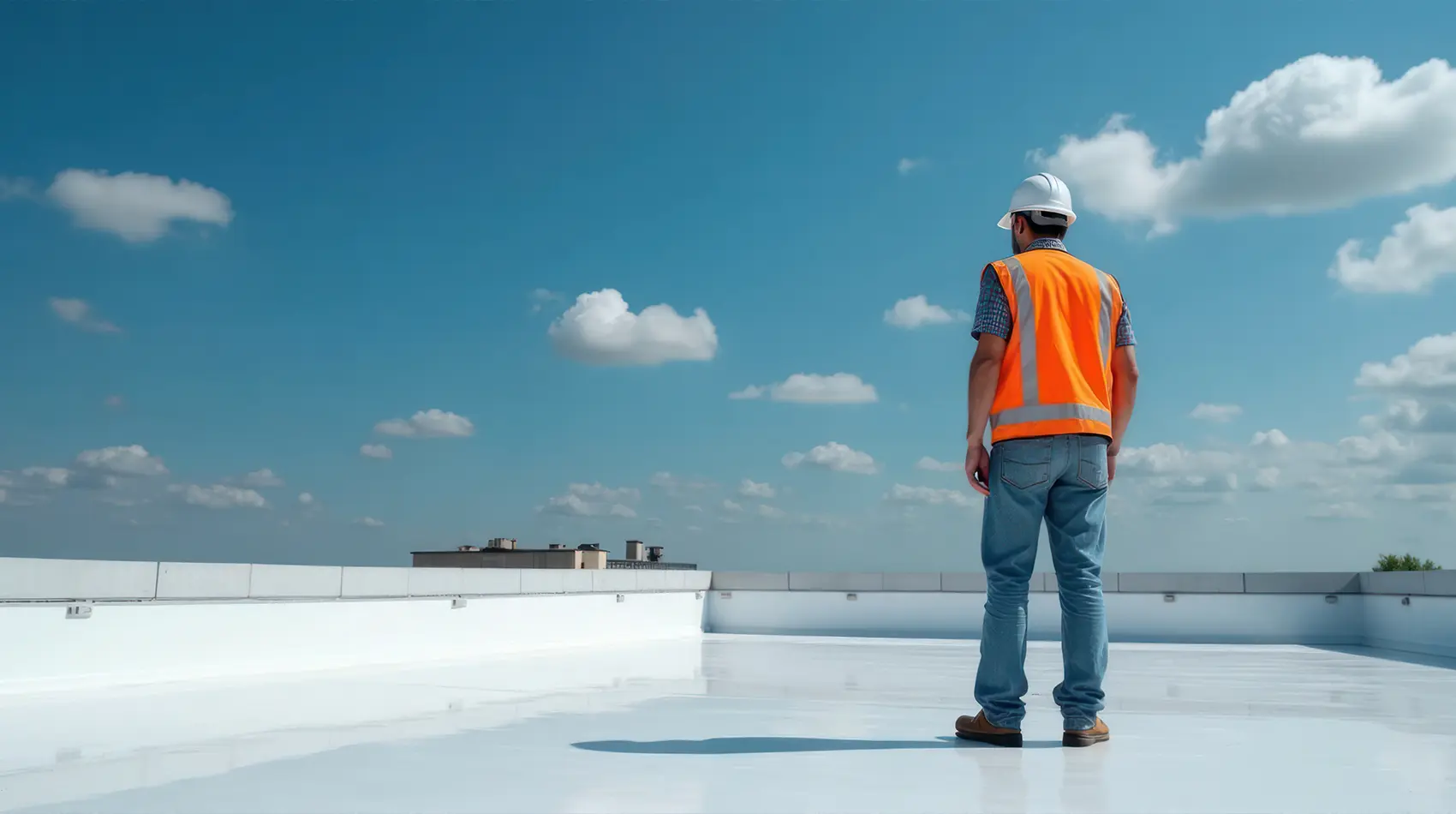

Every rainstorm is a test for a flat roof. Water pools in low spots. It pushes against seams for days. You wait to see if this is the storm that finds the weak point.
Flat roofs leak more than sloped roofs. This is physics, not poor workmanship. Water runs off a slope in minutes. On a flat roof it can sit for two full days.
A coating turns the whole surface into one seamless shield. Leaks drop. Maintenance gets easier. The roof lasts years longer.
Why Do Flat Roofs Leak So Often?
Gravity is the main reason. Without slope, water has nowhere to go. It collects. It waits. It probes every seam and flashing joint.
Heat and cold add stress. The roof expands in summer and shrinks in winter. After years of this cycle, adhesives weaken. Small gaps open at seams.
Flat roofs also hide damage well. A small seam failure lets water in slowly. You may not see a ceiling stain for weeks. By then insulation is soaked. Mold may be growing.
What Does a Coating Actually Do?
A coating is sprayed or rolled on as a liquid. It hardens into a continuous waterproof skin across the entire roof.
Compare it to clothing. A jacket sewn from many panels has many seams that can leak. A jacket made from one piece has none. A coating gives your roof the one piece version.
Old EPDM or modified bitumen roofs benefit most. The structure underneath is often fine. It is the surface that is failing. Coating renews that surface in one step.
Should You Coat Before Leaks Start?
Yes, if you can. Most owners wait until leaks become routine. That is understandable. But it costs more.
Here is the typical leak cycle. A seam fails slightly. Water wets the insulation. Weeks pass before you notice a stain inside. Now you pay for roof repair plus ceiling repair. The wet insulation never fully dries.
Flat roof coatings break this cycle early. Sealed seams never fail in the first place. No water gets in. No insulation damage. No interior repairs.
Preventive coating costs less than reactive repair. Every time.
Talk to experienced flat roof coatings specialists before the next storm season. A quick inspection now can prevent a crisis later.
Which Coating Handles Ponding Water?
This choice matters. Not all coatings survive standing water.
| Coating Type | Ponding Water | Cost | Best Use |
| Silicone | Excellent | Higher | Roofs with low spots |
| Acrylic | Fair | Lower | Roofs that drain well |
| Polyurethane | Good | Medium | Roofs with foot traffic |
Silicone never breaks down in ponding water. Acrylic can soften when submerged for long periods. A good contractor checks your drainage first, then recommends the right product.
Drain clearing helps too. Crews clean drains and scuppers during prep. Sometimes they add tapered areas to guide water. But where ponding remains, the coating choice must handle it.
Why Are Coated Roofs Easier to Inspect?
An old flat roof is a patchwork. Different colored patches. Stains. Weathered spots. Finding new damage in that mess is hard.
A fresh coating gives you a clean, bright, uniform surface. New punctures stand out. Ponding areas are obvious. Debris is easy to see.
Twice a year inspections become quick and useful. You catch small issues early. Early fixes are cheap. Late fixes are not.
What Does It Cost Compared to Replacement?
Coating runs a fraction of full replacement cost. There is no tear off. No disposal fees. No heavy equipment on your roof for weeks.
Your building stays open during the work. Most jobs finish in days. Tenants barely notice.
Add the avoided costs. Fewer emergency calls. No interior water damage. Lower summer cooling bills from reflective surfaces. A delayed six figure replacement. The return is strong for most buildings.
When Is Coating Not the Answer?
Honesty matters here. If insulation is soaked across large areas, coating will trap that moisture. If the deck is rotted or structurally weak, a new roof is needed.
Act before things get that bad. An aging roof with some leaks and worn surfaces is ideal. A failed roof is not.
Get an inspection from experienced flat roof coatings pros. They will test for moisture and tell you the truth about your options.
FAQs
How do I know if my flat roof needs coating?
Signs include recurring leaks, ponding water, blistering, and a roof age past 10 years. An inspection confirms it.
Can coating fix active leaks?
It seals the whole surface, which stops most leak sources. But damaged areas need repair during prep first.
Which coating is best for ponding water?
Silicone. It is the only common type that never degrades in standing water.
How long does the job take?
Most commercial projects finish in days, not weeks. Buildings usually stay fully open.
Will it lower my energy bills?
White reflective coatings can cut cooling costs noticeably in summer. Large roofs see the biggest savings.